Ancient Cave Art: Paintings from the Ice Age
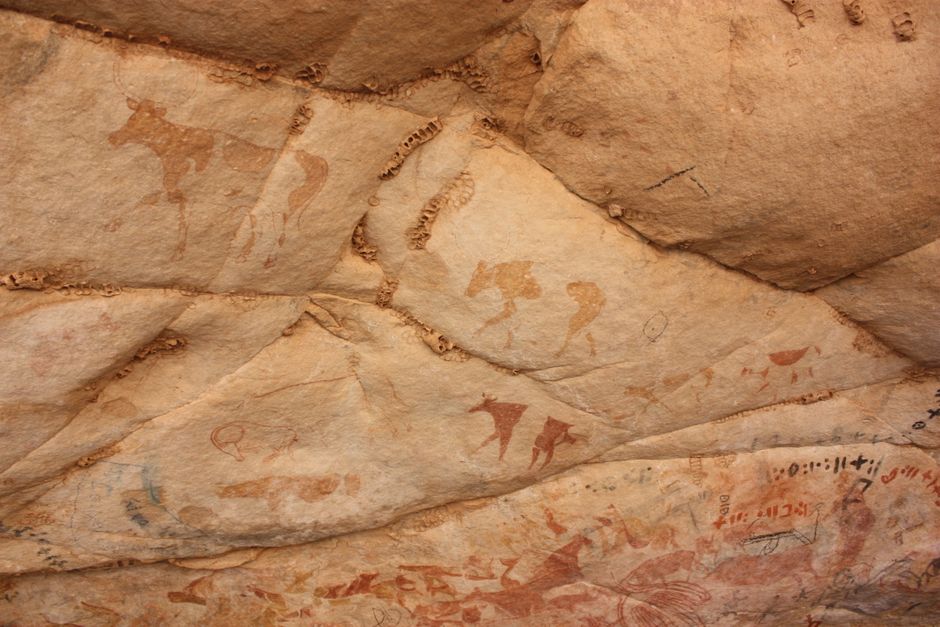
The Ice Age, a period spanning tens of thousands of years, witnessed the emergence of some of humanity’s most remarkable artistic achievements. Deep within limestone caves across Europe, prehistoric humans created vivid paintings of animals, abstract signs, and occasional human figures. These images, preserved by stable cave environments, offer a direct window into the minds and cultures of our distant ancestors. Among the most renowned sites is Lascaux in southwestern France, often called the “Sistine Chapel of Prehistory.”
The study of these ancient artworks involves multiple disciplines, including archaeology, anthropology, art history, and even chemistry. Researchers analyse the pigments, the techniques used, and the placement of images within caves to reconstruct the processes behind their creation. Rather than viewing these works as mere decoration, scholars examine them as part of complex symbolic systems that likely held deep meaning for their creators.
This article explores some of the most famous Ice Age cave painting sites, with a particular focus on Lascaux, and discusses the recurring animal figures and the various theories about what they might have represented. The goal is to provide a neutral and informative overview of how these paintings were made, what they depict, and why they continue to fascinate modern audiences.
The Discovery and Significance of Lascaux
Lascaux Cave was discovered in 1940 by a group of teenagers in the Dordogne region of France. The cave contained hundreds of paintings and engravings dating to around 17,000 years ago, during the Magdalenian period of the Upper Paleolithic. The discovery caused an immediate sensation, as the sheer quantity, quality, and state of preservation surpassed almost any known site at the time. The main chamber, known as the Hall of the Bulls, features enormous aurochs, horses, and deer depicted with remarkable naturalism and dynamic movement.
The significance of Lascaux lies not only in its artistic beauty but also in the information it provides about the cognitive and cultural capabilities of Ice Age humans. The artists used the natural contours of the cave walls to give depth and volume to their subjects. They also employed a sophisticated understanding of perspective and shading, techniques that would not be seen again until the European Renaissance. The cave contains over 600 painted and engraved figures, including animals, abstract geometric shapes, and a few enigmatic human-like forms.
Because of the fragility of the cave environment, Lascaux was closed to the public in 1963 after visiting led to fungal and lichen growth. Today, researchers continue to study the cave under strictly controlled conditions, and replicas such as Lascaux IV allow visitors to experience the art without damaging the original. The ongoing work of preservation organisations, including Cave Insights, contributes to understanding how environmental factors affect these ancient surfaces.
Animal Figures as Central Motifs
The animal figures found in Ice Age caves are not random selections. Across different sites, certain species appear repeatedly: horses, bison, aurochs, ibex, mammoths, and lions. These were animals that prehistoric people encountered either as prey, predators, or competitors for resources. The way animals are depicted can vary from highly realistic to stylised, and sometimes they are shown in groups, hunting scenes, or in confrontation with human figures.
At Lascaux, the most frequently portrayed animals are horses, followed by deer and aurochs. The famous “Chinese Horse” panel shows a horse with a distinctive posture and bristled mane, possibly indicating seasonal changes or specific behaviours. In Chauvet Cave in France, which is older (about 36,000 years), the animals include rhinoceroses, mammoths, and cave lions, suggesting a different fauna and perhaps different symbolic priorities. The choice of animals may have been influenced by local ecosystems, but also by cultural traditions and spiritual beliefs.
It is important to note that these depictions are not simply inventories of available game. Many paintings show animals that were rarely hunted, such as lions or bears. This observation has led researchers to propose that the animals carried symbolic meanings beyond subsistence. The repetition of certain species across vast geographic and temporal ranges implies a shared symbolic vocabulary among Ice Age groups. The process of selecting and depicting animals likely involved intentional choices guided by ritual or storytelling traditions.
Techniques and Materials Used
Creating cave paintings during the Ice Age required careful preparation and knowledge of natural materials. The primary pigments were mineral-based: red and yellow ochre (iron oxides), black from charcoal or manganese dioxide, and white from kaolin or calcium carbonate. These pigments were ground into a powder and mixed with binders such as water, animal fat, plant sap, or even blood. The artists used brushes made from twigs, animal hair, or moss, and sometimes applied pigment by blowing it through a hollow bone to create spray effects.
The cave walls were often prepared by scraping or smoothing the surface to remove loose debris. Engraving tools, such as flint burins, were used to outline figures before painting or to create fine incisions. The artists also exploited natural rock features—cracks, bulges, and stalactites—to integrate them into the composition. This technique, known as “rock-cut” or “topographic” integration, demonstrates a deep understanding of visual perception and spatial awareness.
Analysis of pigments from Lascaux and other sites has revealed that some materials were sourced from significant distances, indicating trade or seasonal movements. The application of paint was often layered, with successive coats building colour intensity. The durability of these paintings is partly due to the stable humidity and temperature inside caves, but also to the chemical stability of the pigments. Modern analytical techniques, such as X-ray fluorescence and Raman spectroscopy, allow researchers to identify the mineral composition of pigments without damaging the artwork.
Theories on Purpose and Meaning
Various theories have been proposed to explain why Ice Age humans created cave art. Early interpretations, such as those by the Abbé Breuil, suggested that the paintings were part of hunting magic—rituals intended to ensure successful hunts. This theory gained support from the observation that many animals were depicted with arrows or wounds. However, more recent research has questioned this idea, partly because many depicted animals were not primary food sources.
Another influential theory is that the caves served as sanctuaries or ceremonial spaces used for initiation rites, shamanic journeys, or seasonal gatherings. The deep, dark chambers would have amplified acoustic effects and created an otherworldly atmosphere. The placement of paintings in hard-to-reach areas, sometimes requiring climbing or crawling, suggests that the act of creating or viewing the images was itself a meaningful experience.
Some scholars propose that the animal figures represented clan totems or symbols of social identity. The recurring association between certain species and geometric signs—such as dots, lines, and cupules—might form a system of notation or even a proto-writing. Others argue that the cave art is evidence of a complex cosmology in which animals were mediators between the human and spirit worlds. No single theory has become universally accepted, and it is likely that the purposes varied across time and region. What remains clear is that these paintings were not casual decorations; they resulted from deliberate, structured, and socially significant practices.
Preservation and Modern Access
The conservation of prehistoric cave art is a pressing challenge. Environmental changes, human breath, and even the introduction of artificial lighting can alter the delicate microclimate that has protected these paintings for millennia. Lascaux, in particular, has faced repeated crises from fungus and mould growth, requiring sophisticated climate control systems and regular monitoring. Similar measures are in place at Altamira in Spain and Chauvet in France, where access is strictly limited.
To balance scientific study with public interest, several replica caves have been created. Lascaux II, III, and IV offer near-identical reproductions of the original cave chambers, allowing visitors to experience the art without damaging the originals. These replicas also serve as educational tools, providing context about the techniques and possible meanings of the paintings. Museums and online databases, such as those maintained by organisations like Cave Insights, enable researchers and the public to explore high-resolution images and 3D models of the art.
The future of cave art preservation depends on continued interdisciplinary research. Digital documentation, non-invasive analysis, and climate modelling all help to anticipate and mitigate risks. While direct access to original sites will remain limited, technological advances offer new ways to study and share these irreplaceable records of human creativity. The process of preserving cave art is ongoing and requires careful stewardship, as the paintings from the Ice Age are not only archaeological treasures but also profound expressions of the human capacity for symbolic thought.