How Stalactites Form: A Beginner’s Guide to Cave Geology
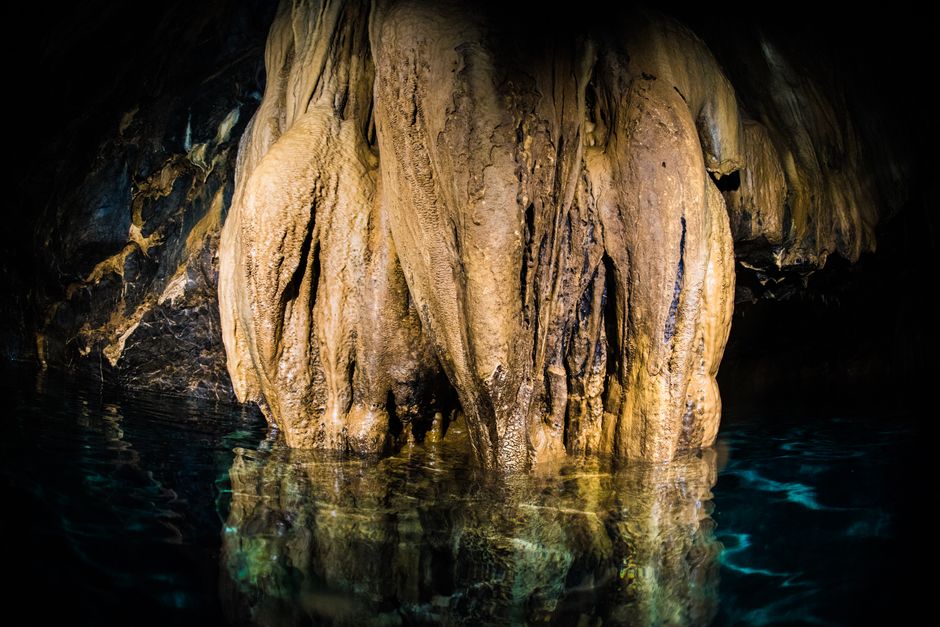
Stalactites are among the most familiar formations found in limestone caves, yet the processes that create them are not always widely understood. These icicle-like structures hang from cave ceilings and grow over extremely long periods through the gradual deposition of minerals carried by water. The study of stalactites is a key part of cave geology, or speleology, as it provides insights into the underground environment, the movement of groundwater, and the chemical reactions that shape subterranean landscapes. This guide introduces the fundamental mechanisms behind stalactite formation, the role of water and dissolved minerals, and what these formations can tell us about the age of a cave system.
Understanding stalactite development requires a basic familiarity with limestone caves. Limestone is a sedimentary rock composed primarily of calcium carbonate. Over time, slightly acidic water seeps through cracks in the rock, dissolving the calcium carbonate and creating cavities. These cavities can enlarge into caves. Once a cave exists, water continues to enter through the ceiling, and as it drips, it leaves behind tiny amounts of mineral matter. Over centuries and millennia, these deposits accumulate to form stalactites. The process is slow and depends on many variables, including temperature, humidity, water flow rate, and the concentration of dissolved minerals.
The formation of stalactites is a natural laboratory of chemistry, physics, and geology working together. By examining the conditions under which they grow, researchers can reconstruct past climates, understand groundwater chemistry, and even date the development of cave systems. The following sections explore each stage of the process in more detail, from the initial dissolution of limestone to the final structure of a mature stalactite.
The Role of Water and Carbon Dioxide
The journey of a stalactite begins with rainwater. As rain falls through the atmosphere, it absorbs carbon dioxide from the air, forming a weak carbonic acid. When this mildly acidic water reaches the ground and percolates through soil, it picks up additional carbon dioxide produced by the respiration of plant roots and the decomposition of organic matter. The resulting solution is capable of dissolving limestone much more effectively than pure water.
Limestone, composed mainly of calcium carbonate (CaCO₃), reacts with carbonic acid (H₂CO₃) to form calcium bicarbonate (Ca(HCO₃)₂), which is soluble in water. This reaction is reversible and depends on the concentration of carbon dioxide in the water. As the water moves through cracks and fissures in the limestone, it slowly dissolves the rock, widening pathways and eventually creating cave passages. The chemical equation for this dissolution is: CaCO₃ + H₂O + CO₂ → Ca(HCO₃)₂. Without the presence of carbon dioxide, the dissolution would be negligible, so this initial acidification is a critical step.
Once the water reaches the cave chamber, it is saturated with dissolved calcium bicarbonate. At this point, the environment changes: the air in the cave typically contains less carbon dioxide than the water, either because of natural air currents or because the cave atmosphere is relatively stable. This difference in CO₂ concentration triggers the reverse reaction, leading to the precipitation of calcium carbonate. The water droplet hanging from the ceiling loses carbon dioxide to the air, and the equilibrium shifts back toward solid calcium carbonate.
The Chemistry of Precipitation
When a drop of calcium bicarbonate-rich water hangs at the ceiling of a cave, it is exposed to the cave air. Carbon dioxide begins to diffuse out of the droplet, causing the chemical balance to move in favour of solid calcium carbonate. The reverse reaction can be written as: Ca(HCO₃)₂ → CaCO₃ + H₂O + CO₂. The calcium carbonate that forms is deposited as a tiny ring around the edge of the droplet. Over time, successive droplets leave more mineral matter in the same location, gradually building a tubular structure known as a soda straw.
Several factors influence the rate and nature of this precipitation. Temperature plays a role: warmer water can hold less dissolved carbon dioxide, so precipitation may occur more quickly in warmer caves. Humidity and air movement also affect how fast CO₂ escapes from the water droplet. In still, humid air, the diffusion of CO₂ is slower, leading to slower growth. Conversely, in a draughty cave, the exchange of gases can accelerate the process. The concentration of dissolved minerals in the water is another variable; more saturated water will deposit material more rapidly.
As the deposit builds up, a thin central tube forms inside the growing stalactite. Water continues to drip through this tube, and minerals are added to the rim at the tip. This process can produce long, slender soda straw stalactites that may reach several metres in length if undisturbed. Eventually, the central tube may become blocked by debris or by mineral build-up, causing water to flow over the exterior of the stalactite. At that point, the stalactite begins to widen into the more familiar cone or carrot shape, with layers of calcite accumulating on the outside.
The Slow Growth Over Time
One of the most remarkable aspects of stalactite formation is the timescale involved. Typical growth rates are measured in millimetres per century, though the exact speed varies widely. In some caves, growth may be as slow as one millimetre every hundred years, while in others with more favourable conditions, it can reach several centimetres per century. The primary determinants are the amount of water entering the cave, the concentration of dissolved calcium bicarbonate, and the rate of CO₂ loss.
Researchers have developed methods to measure stalactite growth rates in situ. One approach involves placing artificial substrates beneath active drips and weighing the deposited material over known time intervals. Another method uses high-resolution imaging to track the increase in length or thickness of existing stalactites. These measurements help calibrate the use of stalactites as archives of past environmental conditions. Because growth is so slow, even small changes in climate or hydrology can leave a record within the layers of calcite.
It is important to note that stalactite growth is not continuous. Periods of drought can halt water flow entirely, while seasonal rainfall can increase drip rates. The formation is also sensitive to changes in land use above the cave, such as deforestation or agriculture, which can alter the amount of water and carbon dioxide entering the ground. Therefore, a stalactite’s size does not directly translate to a precise age without accounting for these variations. However, under stable conditions, the incremental layers can be counted and analysed in a manner similar to tree rings.
How Stalactites Reveal Cave Age
The layered structure of a stalactite contains valuable information about the history of the cave and the surrounding landscape. Each layer of calcite represents a period of deposition, and the chemistry of the layer—specifically the ratios of stable isotopes of oxygen and carbon—can indicate the temperature and vegetation at the time the layer formed. By analysing the sequence of layers, geologists can reconstruct past climates over tens of thousands of years.
Dating stalactites relies primarily on uranium‑thorium radiometric dating. This technique takes advantage of the fact that small amounts of uranium are incorporated into the calcite as it forms, while thorium is not. Over time, uranium decays into thorium at a known rate. By measuring the ratio of uranium to thorium in a sample, the age of the stalactite layer can be calculated. This method can provide ages with high precision for samples up to about 500,000 years old, making it an extremely useful tool for studying the Quaternary period.
Because stalactites grow from the ceiling downward, the oldest material is at the tip (the first part to form) and the youngest is near the ceiling where the stalactite attaches. However, this is a simplification; many stalactites have complex internal structures with growth phases that reflect changes in water flow and mineral supply. Nonetheless, a well‑preserved stalactite can serve as a continuous record of environmental change, offering insights into glacial cycles, monsoon intensity, and landscape evolution. The study of these formations thus contributes to broader fields such as palaeoclimatology and geomorphology.
Other Speleothems and Cave Formations
Stalactites are part of a wider family of cave deposits known as speleothems. Stalagmites form on the cave floor directly beneath dripping stalactites, built from the same mineral‑rich water that splashes down. When stalactites and stalagmites grow together, they can merge into a column. Other speleothems include flowstone, which forms as water flows down walls and floors, and helictites, which are twisted or curved formations that seem to defy gravity due to capillary forces and mineral impurities.
Each type of speleothem provides a different perspective on the cave environment. While stalactites are particularly useful for dating because they grow in a vertical direction with clear layering, stalagmites often contain thicker layers and are more commonly used for high‑resolution climate reconstructions. The study of all speleothems together allows a more complete understanding of the hydrological and chemical history of a cave system.
For those interested in exploring cave geology further, many resources are available from geological surveys and speleological societies. Organisations such as Cave Insights produce educational materials that describe the methods used to analyse these formations and the significance of the data they contain. Whether observed in a natural cave or a museum exhibit, stalactites stand as silent chroniclers of geological time, each one a record of countless drops of water and the slow, patient work of mineral deposition.